


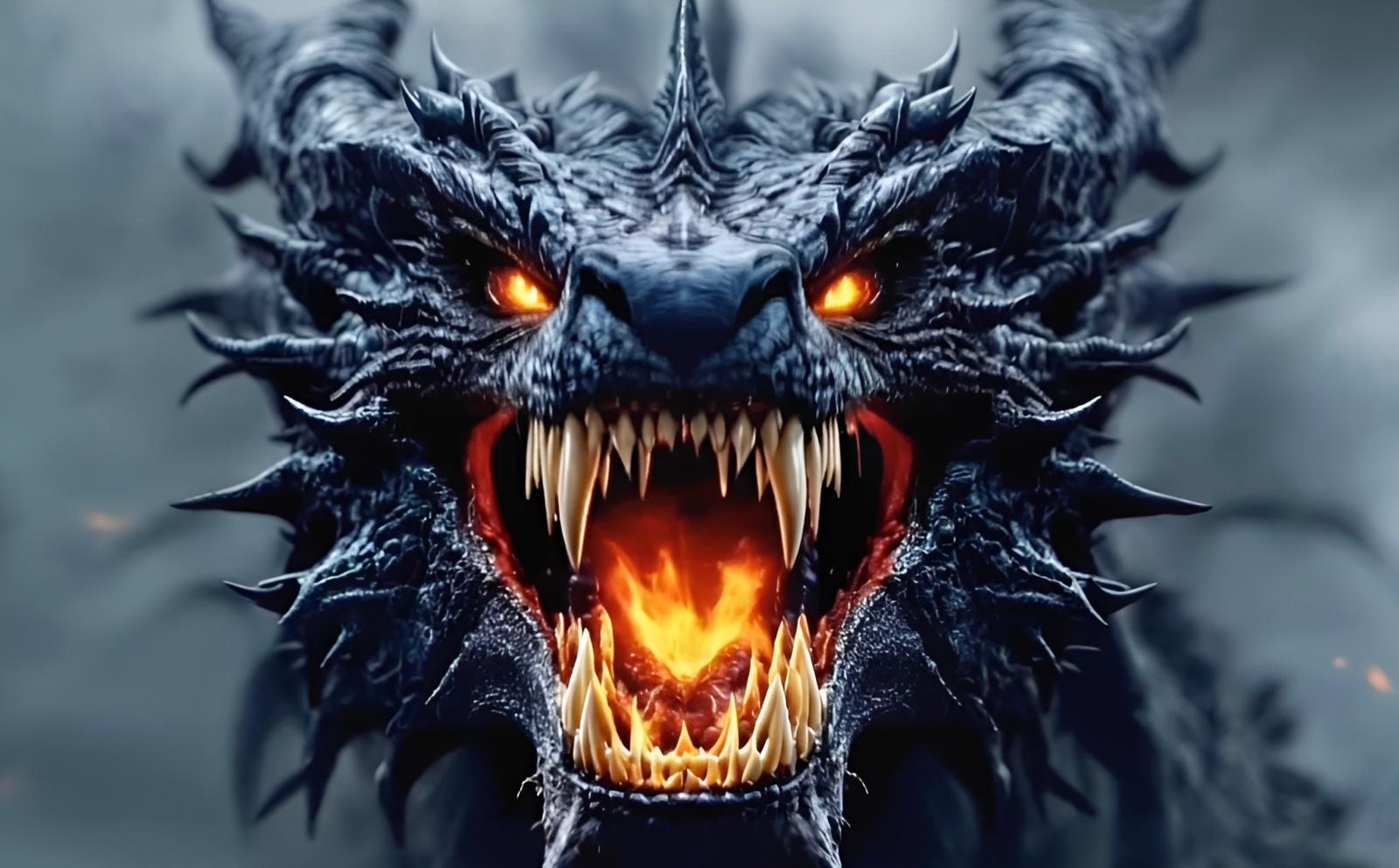
Thuban and the Fiery Guardian Sayyidina Malik (as)

Dragons in Islamic Tradition
From the Realities of Mawlana (Q) as taught by Shaykh Nurjan Mirahmadi.
أَعُوذُ بِاللَّهِ مِنَ الشَّيطَانِ الرَّجِيمِ
بِسْمِ اللهِ الرَّحْمٰنِ الرَّحِيْمِ
A’uzu Billahi Minash Shaitanir Rajeem
Bismillahir Rahmanir Raheem
I seek refuge in Allah from the accursed Satan
In the Name of Allah, the Most Compassionate, the Most Merciful
Alhamdulillahi Rabbil ‘aalameen, was salaatu was salaamu ‘alaa Ashrafil Mursaleen, Sayyidina wa Mawlana Muhammadul Mustafa ﷺ. Madad ya Sayyidi ya Rasulul Kareem, Ya Habibul ‘Azeem, unzur halana wa ishfa’lana, ‘abidona bi madadikum wa nazarekum.
Throughout history, dragons have symbolized power, transformation, and divine justice. While the Western world associates dragons with mythological battles, the Islamic tradition offers unique insights into majestic and fire-born beings. Among the most significant figures in this tradition are ثعبان Thuban, the transformed staff of Prophet Musa (Moses) (as), and Sayyidina Malik (as), the guardian of Hell. These figures, drawn from the holy Qur’an and later mystical interpretations, embody divine intervention, justice, and transformation.
ثعبان Thuban – The Moving Force
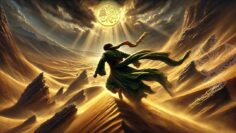
 The Arabic word ثعبان thuban originates from the root ث-ع-ب (Tha-’Ayn-Ba), which conveys movement and force, emphasizing its dynamic and overwhelming nature. The Qur’an describes Prophet Musa’s (as) staff transforming into a thuban (large reptile), illustrating an undeniable act of divine power:
فَأَلْقَىٰ عَصَاهُ فَإِذَا هِيَ ثُعْبَانٌ مُّبِينٌ ﴿١٠٧﴾
7:107 – “Fa alqaa ‘asaahu fa izaa hiya Su’baanum Mubeen.” (Surah Al-A’raf )
“So [Moses] threw his staff, and suddenly it was a clear reptile.” (The Heights, 7:107)
&
فَأَلْقَىٰ عَصَاهُ فَإِذَا هِيَ ثُعْبَانٌ مُّبِينٌ ﴿٣٢﴾
26:32 – “Fa alqaa ‘asaahu fa izaa hiya Su’baanum Mubeen.” (Surat Ash-Shu’ara)
“So he threw his staff, and suddenly it was a clear reptile.” Surah Ash-Shu’ara (The Poets, 26:32)
The term مُّبِينٌ Mubeen (clear) highlights that this transformation was a divine reality, not an illusion.
The Meaning of Thuban in Classical Arabic
 In classical Arabic, the term ثعبان Thuban carries multiple meanings:
- A large fierce reptile, revered for its immense strength, embodying a force of nature.”
- A mythological or supernatural creature in medieval Arabic folklore.
- A poetic and metaphorical symbol of power, transformation, and divine intervention.
The Qur’an’s choice of Thuban rather than a simpler term for a snake suggests Prophet Musa’s (as) staff became a force of immense and terrifying presence, a manifestation of divine power overwhelming falsehood.
Sayyidina Malik (as) – The Fiery Guardian of Hell
Ibn Arabi (Q), in his book “Fusus al Hikam”, describes Angel Malik (as), the guardian of Jahannam (Hell), as a manifestation of divine justice. He explains that the angels overseeing Hell (Zabaniyah) are expressions of Allah’s wrath (Jalal), making Sayyidina Malik (as) a being of immense power, formed from divine fire.
While the Qur’an does not describe Sayyidina Malik (as) as a dragon (تنين, Tinnin), later esoteric writings depict him with fire-breathing and awe-inspiring attributes.
Islamic Mythology – Malik (as) as a ‘Force of Fire’
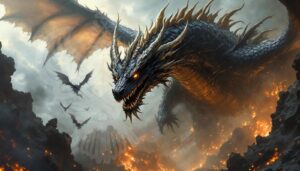 Some later Islamic folklore and mystical traditions describe Sayyidina Malik (as) with dragon-like characteristics, emphasizing his overwhelming and fierce presence:
- Eyes like blazing fire
- A body formed from the flames of intense fire
- Wings or a presence that casts a massive shadow over Hell
- A voice that shakes the cursed
These descriptions intensify the imagery of divine punishment, reinforcing Sayyidina Malik’s (as) unstoppable force as the gatekeeper of Hell.
Qur’anic Interpretation of Thuban and Hayyah
 The Qur’an distinguishes between Thuban (ثعبان) and Hayyah (حية) in describing the staff of Prophet Musa’s (as):
- ثعبان Thuban refers to a large and powerful reptile, indicating that Prophet Musa’s (as) staff transformed into a mighty, fierce creature.
- Hayyah (حية), used elsewhere in the Qur’an, describes a more general moving reptile.
The use of Thuban in Pharaoh’s court suggests Prophet Musa’s (as) staff became a dominating and terrifying force, overpowering the magicians’ illusions.
فَأَلْقَاهَا فَإِذَا هِيَ حَيَّةٌ تَسْعَىٰ ﴿٢٠﴾
20:20 -“Fa alqa asahu fa-iza hiya hayyatun tas’a.” (Surat Taha)
“So he threw his staff, and behold, it was a reptile, moving quickly.” (Taha, 20:20)
Thuban in Pre-Islamic and Classical Arabic Literature
 In pre-Islamic poetry and early Arabic lexicons, Thuban was associated with:
- A mystical beast guarding treasures, similar to dragons in European mythology.
- A symbol of destruction and renewal, where the reptile represents both chaos and divine wisdom.
- A celestial force, as the name Thuban was given to a major star in the Draco (Dragon) constellation, which was once the North Star in ancient Arab astronomy.
The connection to Draco (the celestial dragon) reinforces Thuban’s cosmic significance, linking it to both earthly and divine realms.
Conclusion
 The figures of Thuban and Sayyidina Malik (as) illustrate two aspects of divine power—one of transformation and one of retribution. Prophet Musa’s (as) Thuban represents divine truth overpowering deception, while Sayyidina Malik (as) is the force of divine justice awaiting those who reject guidance.
These descriptions in Qur’anic verses, classical texts, and mystical traditions link them to fire, serpentine imagery, and overwhelming power, reflecting their role as cosmic enforcers of divine will.
Subhana rabbika rabbal ‘izzati ‘amma yasifoon, wa salaamun ‘alal mursaleen, walhamdulillahi rabbil ‘aalameen. Bi hurmati Muhammad al-Mustafa ﷺ wa bi siri Surat al-Fatiha.
Special thanks to our transcribers for their help with transcribing this suhbah.
Original Date of Suhbah: Unknown
- Related Articles:
- The Gate of Truthfulness and How It Leads to the Presence of Sultanan Naseera? Abu Bakr (as) is the Reality of Cane of Musa (as)
- Dragon Breath Meditation Q&A
- The Walking Cane: A Symbol of Sunnah and Love for all of God’s Prophets
- Sunnah P.2 – Protection Against Bad Energy (Siwak, Ring, Cane, Body Energy, Wudu)
- Spiritual Secrets of Guidance & Role of the Companions -Tafsir Surah Kahf (Part 3)
Please Donate and support us to spread these heavenly knowledges by clicking the heart button below.

Copyright © 2025 Naqshbandi Islamic Center of Vancouver, All Rights Reserved.