









Reach the Best Version of Yourself By Finding a Mirror of Truth, a Saintly Guide

From the Realities of Mawlana (Q) as taught by Shaykh Nurjan Mirahmadi
أَعُوذُ بِاللَّهِ مِنَ الشَّيْطَانِ ٱلْرَّجِيمِ
بِسْمِ ٱللَّهِ ٱلرَّحْمَٰنِ ٱلرَّحِيم
A’udhu Billahi Minash Shaitanir Rajeem
Bismillahir Rahmanir Raheem
I seek refuge in Allah from Satan, the rejected one
In the Name of Allah, the Most Beneficent, the Most Merciful
Atiullaha wa atiur Rasul ulul amre minkum. Always a reminder for myself ana abdukal ‘ajeezu, dayeefu, miskin, wa zhalim, wa jahland but for the grace of Allah (AJ) that we are still in existence.
﴾ ياأَيُّهَا الَّذِينَ آمَنُوا أَطِيعُواللَّه وَأَطِيعُوٱلرَّسُولَ وَأُوْلِي الْأَمْرِ مِنْكُمْ…﴿٥٩
4:59 – “Ya ayyu hal latheena amanoo Atiullaha wa atiur Rasula wa Ulil amre minkum…” (Surat An-Nisa)
“O You who have believed, Obey Allah, Obey the Messenger, and those in authority among you…” (The Women, 4:59)
The Believer is a Mirror to His Brother
 Alhamdulillah that this month, the month of Surat al-Zalzalah. The month of the reality of 11, the month of the reality of the ‘ayna – the mirror that when Prophet ﷺ describe that, ‘The believer, mu’min, is a mirror to his brother and sister.’
عَنْ أَبِي هُرَيْرَةَ رَضِيَ اللَّهُ عَنْهُ قَالَ، قَالَ رَسُولُ اللَّهِ ﷺَ:”اَلْمُؤْمِنُ مِرْآةُ الْمُؤْمِنِ.”
‘An Abi Hurairah (ra), qala, qala Rasulullahi ﷺ “Al mu’min miratal mu’min.”
Narrated Abu Hurairah (ra) that the Messenger of Allah (pbuh) said: “The believer is the mirror of the believer.”
Tariqahs Teaches Us to Look at Ourselves in Trials and Tribulations
 That our life is a reflection. One whom is busy purifying themselves so that to take away the bad character and the tarnish. The zikr (Divine remembrance), the istighfar (seeking forgiveness), the awrads (daily practice) that are given are like the bucket of solutions. That each tariqah (spiritual path) is given a bucket, put these solutions and have the students recite. These are the washing principles of how to purify the mirror.
So, every awrad that we’re doing, the zikrs we’re doing, the associations we’re doing – these are all cleaning solutions and these lights, these energies are continuously washing, washing. The tariqah’s busy not looking at people, but looking at myself. Every situation that comes, all that Allah (AJ) is interested in – how are you going to react to it? How are you going to resolve it? What type of character and tools do you have to perfect your character? So, then our life is a series of tests – imtihans, difficulties, trials and tribulation all to purify.
True Mu’min are Reflections for Others
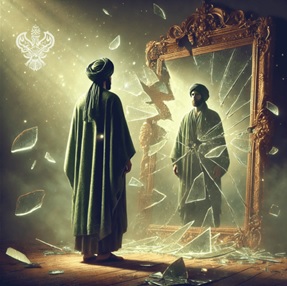 So, when Prophet ﷺ describe the mu’min that not just the one whom — and everybody is a mirror, but to be warned. That the ones whom are building themself, cleaning themself, the lights of faith are slowly entering into their reality. You are polishing. As a result, you will be a reflection to people. That when they look to you, they don’t see you.
They see themselves. These subjects are very deep. This is not easy to pass over quickly. ‘Hmm, what that mean?’ It means that when you look to these believers, there’s two sides. The one looking…what’s the teaching? The guy’s looking at a believer and the side from the believer. So, the shaykh – when they look to the shaykh – they see all their bad characteristics.
You Cannot See Yourself Without a Spiritual Mirror, a Guide
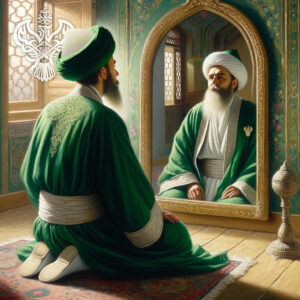 That’s why the turuqs (spiritual paths), the guides and the importance of having a guidance. Have you ever seen somebody try to beatify themselves with no eyes? Because no mirror means you can’t see. You can’t see what your hair looks like. You can’t see what your face looks like. You can’t see if you combed your beard. You don’t know what colour you wore. You’re not able to see yourself. So, when they can’t see – God bless them, Allah (AJ) give them more. Somebody has to help them. But for our understanding of the analogy is that why you need guidance?
It’s because you can’t see yourself. You can’t see what you’re doing, what you’re saying, how you’re acting and to Allah (AJ), you just ugly. You’re not taking care of your own groomed…and we speak in allegories. So, you’re like…come out of the thing all stick is – ‘What is this? What, you didn’t comb yourself? Wash yourself?’ Because this is somebody coming new…doesn’t matter new to religion. Just new to the turuqs, they haven’t been taking care of.
Your Mirror Shows You Your Character
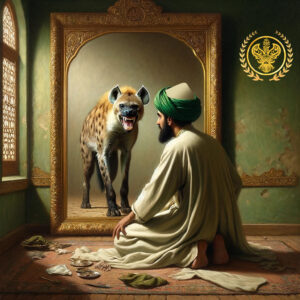 So, they come with like a wild character, wild appearance; not only physically. They may have clothes that are all nice, but we’re talking about the analogy of yourself and your nafs (ego). Why Prophet ﷺ gave this hadith? One of its understandings was for guidance. You can’t guide yourself. You don’t see what you’re comprised of. You don’t see how you’re dressing yourself with character.
You can’t go before Allah (AJ), The King of all creation with this look and this appearance, this character, this khuluq. So, what you need is a mirror. So, somebody tells you: you’re going to have the most important interview in your life for work, for job, for marriage – whatever it is in your life. Could you imagine not taking care of your appearance? Then how would you go before Allah (AJ)? That’s why this was a hadith for guidance in one of its realities and many, many deep realities.
Nabi Musa (as) Witnessed and Took the Muhammadan Reality
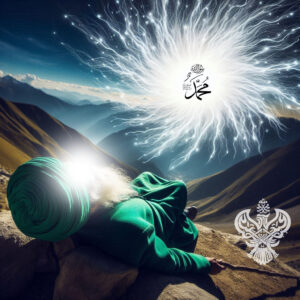 Nabi Musa (as) witnessed when he asked, ‘I want to see, ya Rabbi, I want to see You. I want to see who I’m speaking to.’ Allah (AJ) said, ‘You can’t see Me, but I’ll show you one of My greatest signs.’
He witnessed what he had to witness, khashiya (reverent awe), and was completely effaced; went to zero point down, brought back to life and witnessed what he witnessed, took the Muhammadan reality. “Ana awwal al Muslimeen” – renewed his faith.
وَلَمَّا جَاءَ مُوسَىٰ لِمِيقَاتِنَا وَكَلَّمَهُ رَبُّهُ قَالَ رَبِّ أَرِنِي أَنظُرْ إِلَيْكَ ۚ قَالَ لَن تَرَانِي وَلَٰكِنِ انظُرْ إِلَى الْجَبَلِ فَإِنِ اسْتَقَرَّ مَكَانَهُ فَسَوْفَ تَرَانِي ۚ فَلَمَّا تَجَلَّىٰ رَبُّهُ لِلْجَبَلِ جَعَلَهُ دَكًّا وَخَرَّ مُوسَىٰ صَعِقًا ۚ فَلَمَّا أَفَاقَ قَالَ سُبْحَانَكَ تُبْتُ إِلَيْكَ وَأَنَا أَوَّلُ الْمُؤْمِنِينَ ﴿١٤٣﴾
7:143 – `Wa lamma jaa Musa limeeqatina wa kallamahu Rabbuhu, qala rabbi arinee anzhur ilayka, Qala lan taranee wa lakini onzhur ilal jabali fa inistaqarra makanahu, fasawfa taranee, falamma tajalla Rabbuhu lil jabali ja`alahu, dakkan wa kharra Musa sa’iqan, falamma ‘afaka Qala Subhanaka tubtu alayka wa ana awwal al mu’mineen” (Surat al A’raf)
“And when Moses arrived at Our appointed time and his Lord spoke to him, he said, “My Lord, show me [Yourself] that I may look at You.”
[ Allah ] said, “you will not see Me, but look at the mountain; if it should remain in its place, then you will see Me.” But when his Lord manifested His glory on the mountain, He made it as dust, and Moses fell unconscious. And when he awoke, he said, “Exalted are You! I have repented to You, and I am the first of the believers.” (The Heights, 7:143)
Even Sayyidina Musa (as) was Given a Mirror, Regardless of Rank
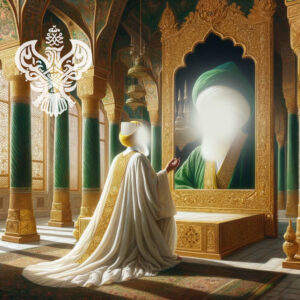 That, ‘What I witnessed of realities, I want that reality.’ So, then there’s always one ON and one OFF because the mirror’s a binary code. Who’s ON and who’s OFF? If both ON, there are no mirrors. They’re just back and forth and both of them blind. But when Allah (AJ) asks for a prophet of Allah (AJ) that, ‘Go to one of My mirrors. Go to one whom is highly purified in these realities.’
﴾فَوَجَدَا عَبْدًا مِّنْ عِبَادِنَا آتَيْنَاهُ رَحْمَةً مِّنْ عِندِنَا وَعَلَّمْنَاهُ مِن لَّدُنَّا عِلْمًا ﴿٦٥
18:65 – “Fawajada ‘abdan min ‘ibadinaa ataynahu rahmatan min ‘indina wa ‘allamnahu mil ladunna ‘ilma.” (Surat Al-Kahf)
“So they found one of Our servant from among Our servants, on whom We had bestowed Mercy from Ourselves and whom We had taught [unseen/heavenly] knowledge from Our own Presence…” (The Cave, 18:65)
Then what was the dialogue in Surat al-Kahf about Sayyidina Musa (as) and Sayyidina Khidr (as)? That becomes an awareness for ourself. It doesn’t matter what your rank is, doesn’t matter how big somebody thinks they are. When Allah (AJ) want to test them, put them before a mirror. The mirror is telling him that, ‘You’re not going to have patience with me.’ (Holy Qu’ran, 18:67)
Sayyidina Khidr (as) Guides the Student, Nabi Musa (as)
 In their dialogue, all of the events that were happening, Sayyidina Musa (as) was preoccupied to say, ‘What you’re doing is wrong.’ So, he’s the student, Sayyidina Khidr (as) is the shaykh. He asked for guidance. Sayyidina Khidr (as) didn’t ask to find a student. He didn’t pray to Allah (AJ), ‘Please send me students.’ One is the student, one is the shaykh. In this example from the great prophets of Allah (AJ), Allah (AJ) sanctify their secrets and raise them higher, Allah’s (AJ) allowing us to use that example from Holy Qur’an.
He’s coming – ‘I want to know of a knowledge to make me roshd (growth) in this haqqaiq (realities) of Sayyidina Muhammad ﷺ.’ He takes the role of the student. He goes to the teacher, goes to the teacher and says, ‘Teach me from these knowledges to make me roshd, cooked, ready.’ The teacher says, ‘You won’t have patience because the little bit that you know, you’re going to keep trying to find fault in me.’
قَالَ لَهُ مُوسَىٰ هَلْ أَتَّبِعُكَ عَلَىٰ أَن تُعَلِّمَنِ مِمَّا عُلِّمْتَ رُشْدًا ﴿٦٦﴾ قَالَ إِنَّكَ لَن تَسْتَطِيعَ مَعِيَ صَبْرًا ﴿٦٧﴾ وَكَيْفَ تَصْبِرُ عَلَىٰ مَا لَمْ تُحِطْ بِهِ خُبْرًا ﴿٦٨﴾
18:66-68 – “Qala lahu Musa hal attabi’uka ‘alaa an tu’allimani mimma ‘ullimta rushda. (66) Qala innaka lan tastatee’a ma’iya sabra. (67) Wa kayfa tasbiru ‘ala ma lam tuhit bihi khubra. (68)” (Surat Al-Kahf)
“Moses said to him: May I follow you, so that you teach me from that (knowledge) which you have been taught that make me grow? (66) (The Other) said, Verily you will not be able to have patience with me! (67) And how can you have patience for what you do not encompass in knowledge? (68)” (The Cave, 18:66-67)
Sayyidina Musa (as) Attempted to Find Faults with His Teacher
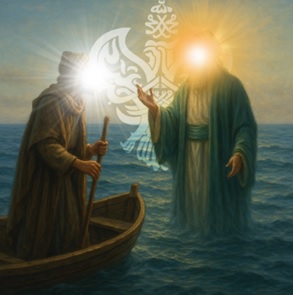 Because this is our life example and every test that came which we said was the boat. He had a big problem with sinking the boat. The slaying of the child and then not charging for the treasure and all the goods and riches. Each one, he was busy trying to qualify his teacher. Big danger because he’s coming to his teacher, he asked Allah (AJ), ‘I want to be taught.’ Allah (AJ), ‘Okay, I have one who will teach you. I will grant him even a special secret to raise him to that darajat (spiritual rank) to be able to teach you.’ (Holy Qur’an, 18:65)
Sank the boat, he found a problem – ‘Why you did that?’ You’re not supposed do that with your teacher. Otherwise, why was he finding fault in everything, ‘alayhis salaam? Why did he come to say that, ‘Why is this? Why is that? Why is that?’
﴾فَانطَلَقَا حَتَّىٰ إِذَا رَكِبَا فِي السَّفِينَةِ خَرَقَهَا ۖ قَالَ أَخَرَقْتَهَا لِتُغْرِقَ أَهْلَهَا لَقَدْ جِئْتَ شَيْئًا إِمْرًا ﴿٧١
18:71 – “Fantalaqa hatta idha rakiba fes safeenati kharaqaha, qala akharaqtaha litughriqa ahlaha laqad jita shay-an imra.” (Surat Al-Kahf)
“So they set out, until when they had embarked on the ship, alKhidr tore it open. [Moses] said, Have you torn it open to drown its people? You have certainly done a grave thing.” (The Cave, 18:71)
 Slayed the child – ‘Why’d you do that?’ Again, found a problem because his intention was maybe to see that I have a lot of knowledge. Who is one of the ones that you are blessing and maybe let me prove my knowledge is higher.’ Otherwise, why was he finding fault in everything (as)? Why did he come to say that ‘Why is this? Why is that? Why is that?’
﴾فَانطَلَقَا حَتَّىٰ إِذَا لَقِيَا غُلَامًا فَقَتَلَهُ قَالَ أَقَتَلْتَ نَفْسًا زَكِيَّةً بِغَيْرِ نَفْسٍ لَّقَدْ جِئْتَ شَيْئًا نُّكْرًا ﴿٧٤
18:74 – “Fantalaqaa hattaa izaa laqiyaa ghulaaman faqatalahoo qaala aqatalta nafsan zakiy yatam bighairi nafs; laqad ji’ta shai’an nukraa” (Surat Al-Kahf)
“Then they proceeded: until, when they met a young man, he slew him. Moses said: ‘Hast thou slain an innocent person who had slain none? Truly a foul (unheard of) thing hast thou done!'”
You Cannot Discredit the Mirror When It Shows Your Faults
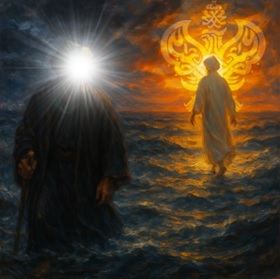 This is the adabs (manners) of the tariqah (spiritual path) are teaching that. When you come into a mirror and you find fault, don’t think it’s the mirror because you haven’t seen the mirror. You haven’t even seen the reality of the mirror. These are very purified souls. What you’re finding fault in is something of your own existence. So, trying to discredit the teacher to maybe think that, ‘Oh, I came for knowledges. Why are you busy breaking a boat, slaying the child, and building fences? I thought you’re going to sit me down and convey all your secrets to me.’ There was something of what he wasn’t getting and finding fault.
So, then dealing with a mirror – it’s Allah (AJ) showing an adab, not the shaykh’s teaching. Allah (AJ) showing an adab that look from the great prophet of Allah (AJ), that he’s going and asking for this uloom and this knowledge which is a shaykh in the Naqshbandi chain. So, from whatever knowledge Sayyidina Khidr (as) has, he gives it to the living shaykhs of this time. They inherit from his knowledge. Sayyidina Abbas Khidr (as) is the supporter and the shaykh in the madad (support) of the shaykhs of Naqshbandiyatil ‘Aliyyah. So, he has a reality to give but the students too preoccupied in trying to find something wrong with him until the teacher says that, ‘This dialogue of us arguing is not working. This is where me and you we part. Out of ihtiram and respect, you’re a big prophet and we have to stop this. It’s like bickering.’
﴾قَالَ هَـٰذَا فِرَاقُ بَيْنِي وَبَيْنِكَ ۚ سَأُنَبِّئُكَ بِتَأْوِيلِ مَا لَمْ تَسْتَطِع عَّلَيْهِ صَبْرًا ﴿٧٨
18:78 – “Qaala haazaa firaaqu bainee wa bainik; sa unabi ‘uka bitaaweeli maa lam tastati’ ‘alaihi sabraa” (Surat Al-Kahf)
“He answered: ‘This is the parting between me and thee: now will I tell thee the interpretation/significance of (those things) with which you could not have patience.'” (The Cave, 18:78)
Sayyidina Khidr (as) Explained His Actions to Nabi Musa (as)
Action 1: Breaking the Boat
 But before he let him go, he gave him the example because this is the mirror. ‘This problem you had with me, Allah (AJ) was showing you your own life. If you stop trying to find faults in the mirror and understood the reality, you would have seen Allah (AJ) was showing you miraculously your own life. The boat you didn’t like – your mom threw you in a boat, risked your life. What mother would throw a child in a boat down a river in a crib and a basket?’ Because it was unconscionable because when he had a complaint about the boy, he say…the boat he [Sayyidina Musa (as)] say, ‘Why would you break a boat like that?’
﴾فَانطَلَقَا حَتَّىٰ إِذَا رَكِبَا فِي السَّفِينَةِ خَرَقَهَا ۖ قَالَ أَخَرَقْتَهَا لِتُغْرِقَ أَهْلَهَا لَقَدْ جِئْتَ شَيْئًا إِمْرًا ﴿٧١
18:71 – “Fantalaqa hatta idha rakiba fes safeenati kharaqaha, qala akharaqtaha litughriqa ahlaha laqad jita shay-an imra.” (Surat Al-Kahf)
“So they set out, until when they had embarked on the ship, Al-Khidr tore it open. [Moses] said, Have you torn it open to drown its people? You have certainly done a grave thing.” (The Cave, 18:71)
He [Sayyidina Khidr (as)] explained later: ‘Why would your mom put you in a basket? For sure, it was death. Who puts a child that can’t breathe, can’t walk, can’t talk and throw them in a basket? This was your life. You were that basket. This boat is your analogy, not me.’
Action 2: Slaying the Boy
Because he’s (Sayyidina Musa (as)) busy thinking Sayyidina Khidr’s (as) life that – ‘Why I have to accompany your life and see these things?’ Says, ‘You weren’t accompanying my life. Allah (AJ) was showing you your life. I was merely your guide to take you for it but you didn’t have the patience to see your life through me. The boy that you slew and you had all your objections.
﴾فَانطَلَقَا حَتَّىٰ إِذَا لَقِيَا غُلَامًا فَقَتَلَهُ قَالَ أَقَتَلْتَ نَفْسًا زَكِيَّةً بِغَيْرِ نَفْسٍ لَّقَدْ جِئْتَ شَيْئًا نُّكْرًا ﴿٧٤
18:74 – “Fantalaqaa hattaa izaa laqiyaa ghulaaman faqatalahoo qaala aqatalta nafsan zakiy yatam bighairi nafs; laqad ji’ta shai’an nukraa” (Surat Al-Kahf)
“Then they proceeded: until, when they met a young man, he slew him. Moses said: ‘Hast thou slain an innocent person who had slain none? Truly a foul (unheard of) thing hast thou done!'”
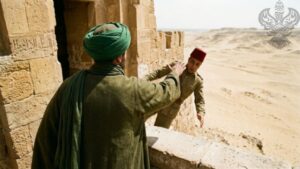 What about the man that you pushed and the guard that you push? You’re a prophet of Allah (AJ). How you committed an offence like that? That was your life.
﴾وَدَخَلَ الْمَدِينَةَ عَلَىٰ حِينِ غَفْلَةٍ مِّنْ أَهْلِهَا فَوَجَدَ فِيهَا رَجُلَيْنِ يَقْتَتِلَانِ هَـٰذَا مِن شِيعَتِهِ وَهَـٰذَا مِنْ عَدُوِّهِ ۖ فَاسْتَغَاثَهُ الَّذِي مِن شِيعَتِهِ عَلَى الَّذِي مِنْ عَدُوِّهِ فَوَكَزَهُ مُوسَىٰ فَقَضَىٰ عَلَيْهِ ۖ قَالَ هَـٰذَا مِنْ عَمَلِ الشَّيْطَانِ ۖ إِنَّهُ عَدُوٌّ مُّضِلٌّ مُّبِينٌ ﴿١٥
28:15 – “Wa dakhalal madeenata ‘alaa heene ghaflatim min ahlihaa fawajada feeha raju laini yaqtatilaani haazaa min shee’atihee wa haaza min ‘aduwwihee fastaghaasahul lazee min shee’atihee ‘alal lazee min ‘aduwwihee fawakazahoo Musaa faqadaa ‘alaihi qaala haaza min ‘amalish Shaitaani innahoo ‘aduwwum mmudillum mubeen” (Surat Al-Qasas)
“And he entered the city at a time of inattention by its people and found therein two men fighting: one from his faction and one from among his enemy. And the one from his faction called for help to him against the one from his enemy, so Moses struck him and [unintentionally] killed him. [Moses] said, ‘This is from the work of Satan. Indeed, he is a manifest, misleading enemy.'” (The Stories, 28:15)
Action 3: Built a Wall Charging No Fee
 So, that to show you sometimes there’s a hikmah (wisdom). Allah (AJ) operates with a hikmah. Why to question it? You weren’t questioned. Why are you questioning Allah’s (AJ) Will here? It was your life. Because he’s thinking again he’s following Sayyidina Khidr’s (as) life. Sayyidina Khidr’s (as) teaching, ‘No, this is your life. Allah (AJ) sent me here to give you these three examples. This is the miraculous nature of your life He’s going to show you. Then the wall that we built and you wanted money for it and you’re so upset about it.
﴾فَانطَلَقَا حَتَّىٰ إِذَا أَتَيَا أَهْلَ قَرْيَةٍ اسْتَطْعَمَا أَهْلَهَا فَأَبَوْا أَن يُضَيِّفُوهُمَا فَوَجَدَا فِيهَا جِدَارًا يُرِيدُ أَن يَنقَضَّ فَأَقَامَهُ ۖ قَالَ لَوْ شِئْتَ لَاتَّخَذْتَ عَلَيْهِ أَجْرًا ﴿٧٧
18:77 – “Fantalaqa hatta idha ataya ahla qaryatin istat’ama ahlaha faabaw an yudayyifoo huma fawajada feeha jidaran yureedu an yanqadda faaqamahu, qala law sheta lat takhadhta ‘alayhi ajra.” (Surat Al-Kahf)
“So they set out, until when they came to the people of a town, they asked its people for food, but they refused to offer them hospitality. And they found therein a wall about to collapse, so alKhidr restored it. [Moses] said, If you wished, you could have taken for it a payment.” (The Cave, 18:77)
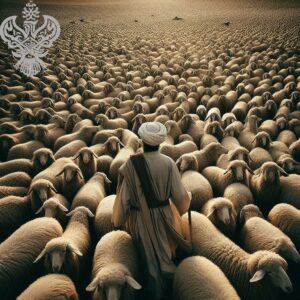 You went to the daughters of Shoaib (as) and you watered their sheep and charged no fee for the hopes of the reward of a wife. You had no problem there so when I’m telling you we have to build this for no fee because Allah (AJ) will give our reward and these are to protect these childrens, their inheritance, why you had a problem with it? This was you. You didn’t have a problem when it was happening for your wife to have a marriage.’
﴾فَسَقَىٰ لَهُمَا ثُمَّ تَوَلَّىٰ إِلَى الظِّلِّ فَقَالَ رَبِّ إِنِّي لِمَا أَنزَلْتَ إِلَيَّ مِنْ خَيْرٍ فَقِيرٌ ﴿٢٤
28:24 – “Fasaqaa lahumaa summa tawallaaa ilaz zilli faqaala Rabbi innee limaaa anzalta ilaiya min khairin faqeer” (Surat Al-Qasas)
“So he watered [their flocks] for them; then he went back to the shade and said, ‘My Lord, truly am I in (desperate) need of any good that You send me!” (The Stories, 28:24)
What You Don’t Like When You Look Into a Purified Mirror is Actually You
 So, it means that was an immense reality of Surat al-Kahf and the ‘ayna (mirror) that when the student comes and meets a mu’min (believer) either from a distance, doesn’t have to meet in person. Anytime they deal with a mu’min and higher because from mu’min, they go muhsin. From muhsin, they go mukhlis (sincere). These are very purified mirrors. What you see of what you don’t like is actually you. You haven’t seen them at all. Good God, you need how many years of purification through your heart to see who that person is, what station and where they’re standing in their reality. Your interaction with them is merely Allah (AJ) showing who you are.
Remember you came from out of nowhere in the woods, having never looked at yourself with a real eye. You may have thought you were beautifully groomed for the Divinely Presence. As soon as you interact with the shaykhs, they are the ‘ayna. They are the mirror that Allah (AJ) wants you to look at. Every interaction with them, every waswas (whisper) that comes to you, everything you dislike, everything that is happening and ‘Why is like this? What’s like this? What’s like that?’ It’s all your life that you’re seeing. You’re not seeing the shaykh.
Saintly Guides Don’t Show Your Their Lives, But Your Own
 This is not the shaykh’s life. It’s your life that you see through the mirror. So, that is an immense reality for us. All the interactions, good God, now nobody has any ability to communicate. Nobody has any eloquence in their communication. Everybody’s angry. Everybody now has an opportunity. When they say, ‘Go to the store and get something,’ oh, you better believe it’s going to be late. Why? To see what you’re made of. The same $30 you donate – if something you got for $30 came halfway or came late or came something – oh, how much you get angry.
Where are the good khuluq (character) of people that say, ‘Alhamdulillah bi iznillah in the way of Allah (AJ), what does it matter.’ You didn’t put 10,000. You put $30, but it shows your character. Then you give donation, you watch online. Whatever your interaction is Allah’s (AJ) ni’mat (blessing) that interact with these mirrors so that you can see who you are. Because Allah (AJ) wants somebody clean, not somebody who thinks they can see. He says…Allah (AJ) describe, ‘You have eyes but you don’t see.’
﴾وَلَقَدْ ذَرَأْنَا لِجَهَنَّمَ كَثِيرًا مِّنَ الْجِنِّ وَالْإِنسِ ۖ لَهُمْ قُلُوبٌ لَّا يَفْقَهُونَ بِهَا وَلَهُمْ أَعْيُنٌ لَّا يُبْصِرُونَ بِهَا وَلَهُمْ آذَانٌ لَّا يَسْمَعُونَ بِهَا ۚ أُولَـٰئِكَ كَالْأَنْعَامِ بَلْ هُمْ أَضَلُّ ۚ أُولَـٰئِكَ هُمُ الْغَافِلُونَ ﴿١٧٩
7:179 – “Wa laqad zara’naa li jahannama kaseeram minal jinni wal insi lahum quloobul laa yafqahoona bihaa wa lahum a’yunul laa yubisiroona bihaa wa lahum aazaanul laa yasma’oona bihaa; ulaaa’ika kal an’aami bal hum adall; ulaaa’ika humul ghaafiloon” (Surat Al-Ar’af)
“Many are the Jinn’s and men we have made for Hell: They have hearts wherewith they understand not, eyes wherewith they see not, and ears wherewith they hear not. They are like cattle,- nay more misguided: for they are heedless (of warning).” (The Heights, 7:179)
Allah (AJ) Looks Not to Our Form, But to Our Heart
 We’re not talking about dressing nicely with suits but Allah (AJ) say, ‘What’s your spiritual dress? What’s your spiritual reality? So, that when you’re presented to My Divinely Presence, I want to see the good character, the medallions of good character that are dressed upon your soul. I want to see the beatific heart.’ Allah (AJ) doesn’t look to the surah (face), doesn’t look to your shekl and to your form, doesn’t look to your wealth and status – ‘Oh, this one has nice clothes. Let Me look at him more.’ Allah (AJ) looks to the heart of the believer.
عَنْ أَبِي هُرَيْرَةَ عَبْدِ الرَّحْمَنِ بْن صَخْرٍ قَالَ: قَالَ رَسُولُ اللهِ:” إِنَّ اللهَ لَا يَنْظُرُ إِلَى أَجْسَامِكُمْ، وَلَا إِلَى صُورِكُمْ، وَلَكِنَّ يَنْظُرُ إِلَى قُلُوبِكُمْ”. رَوَاهُ مُسْلِمٌ
‘An Abi Hurairah ‘Abdir Rahman bin Sakhar (ra) qala: qala Rasulullahi (saws), “Inna Allaha la yanzuru ila ajsamikum, wa la ila suwarikum, wa laaken yanzuru ila Quloobukum.” [Rawahu Muslim]
Abu Hurairah (ra) narrated that: Messenger of Allah (saws) said, “Allah does not look at your body/figures, nor at your appearance/frame but He looks at your hearts.” [Recorded in Muslim]
Allah (AJ) Will Only Ask Us About Our Own Grave, Not Others
 Maybe it completely decimated appearance physically but a heart like gold that shining from Divinely lights. That’s all that Allah (AJ) looks to is to the heart of that servant. That you lived a life in their mirror. You constantly fought and found your faults in every agitation you felt, every interaction that you felt, everything that you’re feeling. It’s a story about you for the wise ones. Then they write, ‘Oh, this like this. This like this and this is my life and I’m impatient. I’m agitated, I’m angry – all my things, all my characters.’
Because Allah (AJ) not going to call you to account of the shaykh, say, ‘Come on, give us the report.’ Because Allah (AJ) describe when they were describing about Sayyidina Ibrahim (as). He says the Jewish and Christian got together and say, ‘Sayyidina Ibrahim (as) is with us.’ Allah (AJ) say, ‘He’s neither with you, neither with them. He’s his own man. He’s hanif (monotheist). You worry about your grave. I’m not calling you to account of who people are, what their actions were. I only want to know about you and your grave.’
Every Interaction You Have With Your Guide Shows Your Character
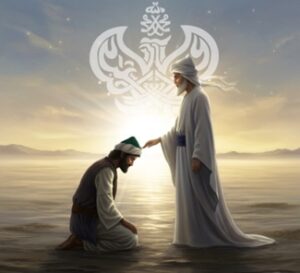 So, then the turuqs are immense reality of that hadith and that hadith is a symbol of why we need guidance. We need a life with a mirror. We need to interact and look into the mirror. Every interaction, every email, every activity that you involve yourself with, being online, getting angry – ‘Why they didn’t answer my questions?’ Getting angry with the response from the questions. Sending an email say, ‘I’ve sent an email, you didn’t reply.’
So, what? You weren’t the president of the heavens and nobody replied. Send it again, send it again and patiently wait until something comes. But it shows in the character, Allah (AJ) sees you have impatience. You have hidden angers, you…all these issues, Allah (AJ) wants them resolved.
Ask to Always Have a Mirror With You
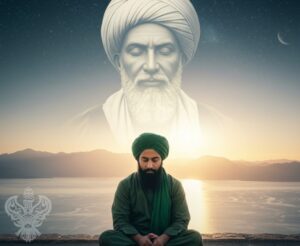 Then imagine the very powerful mirror in which you do your muraqabah (spiritual connection). Where you say, ‘Ya Rabbi, I want that mirror all the time.’ The people who are hesitant to take the step, then the middle of the late at night, everyone sleeping. Everyone’s out of the way. Pray your Salatul Isha (Night prayer) late. Some cultures, I don’t know why they want to pray it fast and quick.
You pray your maghrib (sunset prayer) on time, pray Salatul Isha late. Why? Because you’re being rewarded all the way to the time of Salatul Isha. When you pray your Salatul Isha late, most likely everybody is now gotten out of the way. At the end of your Salatul Isha, your attahiyat – ‘salaam alaykum, salaam alaykum’ and then sit. You’re at Rauza Sharif (Holy Burial Chambers of Sayyidina Muhammad ﷺ), put some salawats (praises upon Sayyidina Muhammad ﷺ) and just ask yourself to be in the presence of Prophet ﷺ and with the shaykh. ‘I’m asking for my shaykh to be present and this his nazar (gaze) be upon me, his presence to be in front of me.’
You Can Lie to Yourself, But You Cannot Lie to the Mirror of Truth
 That is the mirror that begins to reflect. With that light in front of me, what have I done wrong? What is my bad character? Why was I angry? Why did I do?’ You can lie to yourself but you cannot lie to them. They’re the mirror of truth that comes to be present with you in the meditation and say, ‘No, this was wrong. This was wrong. This was wrong.’ That’s the hisaab (account), muhasabah (accounting). Because their light comes and the more you’re able to connect and the more you’re able to be consistent with it, that is the light of your muhasabah, your accounting because their light is there. You’re now, ‘Yes, I feel that was wrong. I feel what I said was wrong. My character was wrong. I did get angry.’
Then you write it that tomorrow, inshaAllah, be better or for one week, you’re in the same issue. Then you know you’re not doing better. Something’s wrong. Then I’m going to penalize myself. I’m going to do more this, more that, more that so that you understand what you’re doing wrong and it stops. Otherwise, you just keep, keep, keep and then nothing’s happening. We pray that Allah (AJ) give us an understanding of these realities and what Allah (AJ) want to dress us and bless us with of these immense realities and to perfect ourselves to reach towards these lights and this holy heart of Sayyidina Muhammad ﷺ.
Subhana rabbika rabbal ‘izzati ‘amma yasifoon, wa salaamun ‘alal mursaleen, walhamdulillahi rabbil ‘aalameen. Bi hurmati Muhammad al-Mustafa wa bi siri Surat al-Fatiha.
Special thanks to our transcribers for their help with transcribing this suhbah.
Original Date of Suhbah: June 18, 2021
Related Articles:
- Surah Kahf: The Heart Cave – In Search of a Saintly Guide Waliyun Murshida
- Reality of Mirrors and Musa (as) Accompanying the Unseen Khidr (as)
- Follow the Shaykhs of Love!
- Social Pressures in the Three Tests of Sayyidina Musa (as)
- God’s Mirrors on Earth
Please Donate and support us to spread these heavenly knowledges by clicking the heart button below.

Copyright © 2026 Naqshbandi Islamic Center of Vancouver, All Rights Reserved.