







Face Whatever Fate is Written For You, Like Imam Hussain (as)
From the Realities of Mawlana (Q) as taught by Shaykh Nurjan Mirahmadi
أَعُوذُ بِاللَّهِ مِنَ الشَّيطَانِ الرَّجِيمِ
بِسْمِ اللهِ الرَّحْمٰنِ الرَّحِيْمِ
A’uzu Billahi Minash Shaitanir Rajeem
Bismillahir Rahmanir Raheem
I seek refuge in Allah from the accursed Satan
In the Name of Allah, the Most Compassionate, the Most Merciful
Alhamdulillahi Rabbil ‘aalameen, was salaatu was salaamu ‘alaa Ashrafil Mursaleen, Sayyidina wa Mawlana Muhammadul Mustafa ﷺ. Madad ya Sayyidi ya Rasulul Kareem, Ya Habibul ‘Azeem, unzur halana wa ishfa’lana, ‘abidona bi madadikum wa nazarekum.
Atiullah wa atiur Rasul wa Ulil amre minkum. Always a reminder for myself, ana abdukal ‘ajeez, wa dayeef, wa miskin, wa zhalim, wa jahl, and but for the grace of Allah (AJ) that we’re still in existence.
أَطِيعُوا اللَّهَ وَأَطِيعُوا الرَّسُولَ وَأُولِي الْأَمْرِ مِنكُم… ﴿٥٩﴾ …
4:59 – “…Atiullaha wa atiur Rasula wa Ulil amre minkum…” (Surat an-Nisa)
“…Obey Allah, obey the Messenger, and those in authority among you…” (The Women, 4:59)
Through Good Character and Humility, We Achieve a Divine Reality
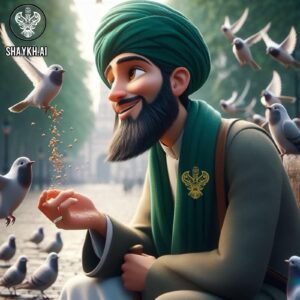 Alhamdulillah, in these holy nights of ‘Ashura and the realities of Muharram, the foundation of which our existence and this door of ma’rifah (gnosticism) through the foundation of humility. Its structure and everything that we built upon humility is good character. This good character, with the strong foundation of humility, becomes a Divine reality. That Divine reality dresses that which is humble and dresses that which has good characteristics. In the intercession and the gates of forgiveness, that everything through the Divinely Presence is showing the immense amount of mercy. That the year begins with repentance, the year begins with forgiveness and mercy. We described even like in Ramadan – first ten days of Ramadan is a rahmah (mercy).
عَنْ سَلْمَانِ اَلْفَارِسِيْ رَضِيْ اللهُ عَنْهُ، أَنْ رَسُوْلُ اللَّهِ ﷺ قال: ” شَهْرُ رَمَضَانَ أَوَّلُهُ رَحْمَةٌ ، وَأَوْسَطُهُ مَغْفِرَةٌ ، وَآخِرُهُ عِتْقٌ مِنَ النَّارِ.” [المصدر: الإمَامْ اَلْألْبَانِي ( مِشْكَاةْ اَلْمَصَابِيحْ) ، كتاب ٧، حديث ٩]
‘An Salman al Farsi (ra), an Rasulullahiﷺ qala: “Shahru Ramadana awwalahu rahmatun, wa awsatuhu maghfiratun, wa akhiruhu ‘itqun minan naar.” [Al Imam al Albani, Meshkatal Misbah, Kitab 7, Hadith 9]
Narrated by Salman al Farsi (ra), that the Messenger of Allah ﷺ said, “The first (ten days) of the month of Ramadan is mercy, the middle (ten days) is forgiveness, and the last (ten days) is salvation/freedom from the fire.” [Source: Al Imam al Albani, Meshkat al Masabih – 1965, Book 7, Hadith 9]
Live a Life of Sacrifice Like the Prophets Before Us
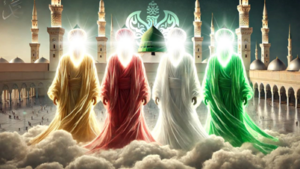 It’s only by means of that rahmah (mercy) that we can enter into anything. We can achieve anything because Allah (AJ) is granting a mercy, granting a forgiveness. That no matter what you are, who you are that enter into this gate of forgiveness to achieve God’s grace and mercy. When we reach to the understanding of forgiveness and all the prophets asking for Divine forgiveness and the completion of prophecy, the completion of character, the completion and the highest reality that God wants mankind to achieve is to live a life of sacrifice in which we self-sacrifice.
It means that we came to be generous. We sacrificed our time. We sacrificed our wealth. We sacrificed everything and when we get to the Muhammadan reality, Prophet ﷺ begins to describe and teach for us that we have to sacrifice ourself. That our submission and the perfection…perfection of our submission is the greatest achievement for mankind. It means that what can we give back to Allah (AJ) other than the property and goods and money that all religions are stating and every entry into understanding of religion, but the highest level because the highest of the prophets is coming to teach us that the highest level of submission, the highest level of achievement is to give back your will. Give back what Allah (AJ) has given to you that distinguishes you from all other creation is that your will, your self will; your will to think that you have a right to choose and right to contemplate. Everything else is forced into submission.
Submit Your Free Will Back to Allah (AJ)
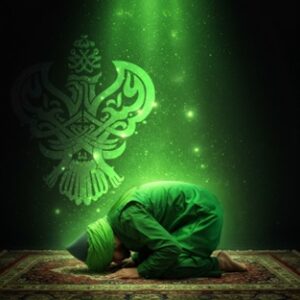 The beauty of our creation is that we have a perceived free will. In this gate of humility and the reality of Prophet ﷺ comes to teach the surrendering of the free will. That, ‘Surrender. Give back to Allah (AJ) the dearest gift that you can give and that is your free will.’ When the servant understands that that’s the gift that what God has given to me, gave money, gave time, doing all of these things. But when we come to the gate of Prophet ﷺ as all the prophets were asking for forgiveness, all of them have an eternal understanding and reality. That we arrived here through Sayyidina Adam (as) and we repent for all of what God has given to us, “Isma kullaha.” We came to Earth and forgot all these knowledges, all these realities.
﴾وَعَلَّمَ آدَمَ الْأَسْمَاءَ كُلَّهَا ثُمَّ عَرَضَهُمْ عَلَى الْمَلَائِكَةِ فَقَالَ أَنبِئُونِي بِأَسْمَاءِ هَـٰؤُلَاءِ إِن كُنتُمْ صَادِقِينَ ﴿٣١
2:31 – “Wa ‘allama Adamal Asma a kullaha, thumma ‘aradahum ‘alal Malaikati faqala anbioonee bi asma i haola e in kuntum sadiqeen.” (Surat Al-Baqarah)
“And He taught Adam the names – all of them. Then He showed them to the angels and said, ‘Inform Me of the names of these, if you are truthful.’” (The Cow, 2:31)
Each Prophet Asked for Forgiveness Through Tests of Difficulty
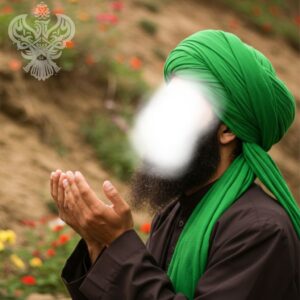 Sayyidina Nuh (as) comes and teaches us that we have to repent. We have to struggle in God’s way for our faith and our ship to be born, that the rains and testing that come into life. Sayyidina Ibrahim (as) comes and teaches us: they’re going to throw fire upon you, cast every type of difficulty to try to burn you and to make you a fiery, angry person. This is the role of this world that you have to ask and seek God’s forgiveness and God’s mercy that you don’t become narani and fiery.
Sayyidina Musa (as) comes and teaches that to run from this dunya (material world), not trying to carry the wealth of dunya into your hereafter and that Allah (AJ) has to save a nation from that desire. Part the sea and leave a dunya reality to move towards the heavenly kingdom. Sayyidina Isa (as) comes and teaches us now how to rise. That to lift oneself up and asking Allah’s (AJ) repentance of this mercy, ‘Ya Rabbi, let me to rise to the heavenly kingdom, be inspired by Your heavenly kingdom, be dressed and blessed by the heavenly kingdom and to arrive at the gate of Sayyidina Muhammad ﷺ.’
Align Your Will With the Will of God
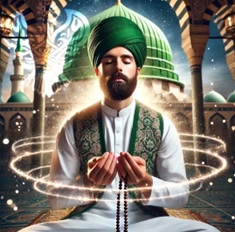
That begins to teach is then sacrifice your will. Put yourself on the table. Put yourself, that, ‘Ya Rabbi, I sacrificed my will. My will is not important and that Your Will should be done.’ The heavenly…the heavenly will; ‘Thy kingdom come and Thy Will shall be done.’
“…Thy Kingdom come, Thy will be done. On earth as it is in heaven. Give us this day our daily bread; and forgive us our trespasses, as we forgive those who trespass against us; and lead us not into temptation, but deliver us from evil.” – The Lord’s Prayer
The will of Allah (AJ), the will of The Almighty should be done upon the heart. One’s perfection of surrender is surrendering that will. All the things we could have been, wanted to be, everything that what we had hoped for dunya, Allah (AJ) ask then, ‘Surrender all of that and make My Will the Will that governs your heart.’
That becomes a servant entering into the Divinely kingdom in which the kingdom of Allah (AJ) radiates within their heart and with their being and within their soul so that at continuous life of service. As a result, they pray that their will is continuously the will of God. That Allah (AJ) inspire within them His Divinely Will upon their being and that becomes the door of Prophet ﷺ that teaching that: our way is to surrender ourself.
Imam Hussain (as) is an Ultimate Example of Being Patient and Surrendering His Will
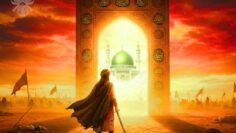
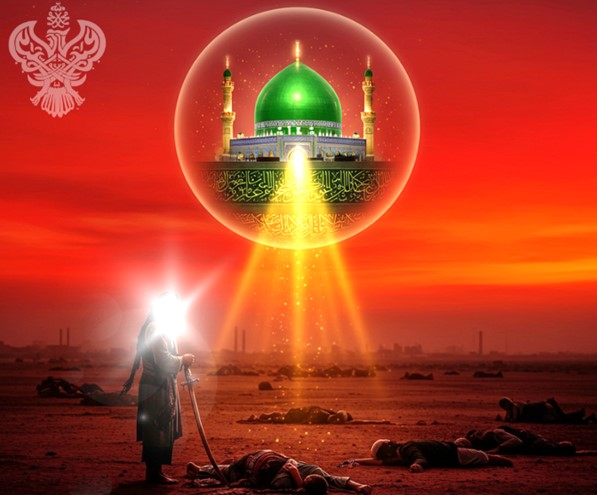
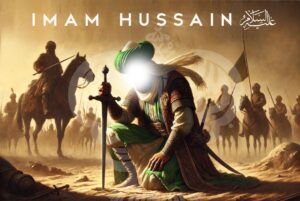 Then the example of ‘Ashura and the realities of Karbala is that whatever our fate is in life, to face it. That Imam al-Hussain (as) represents that whatever the fate that Allah (AJ) has written is to have sabr (patience) and to be a symbol of Allah’s (AJ) sabr. That not the will of Allah (AJ) is not something easy where you merely want something, then you say, ‘Okay, oh alhamdulillah, that would be nice and if it comes, it comes.’ But the will of Allah (AJ) is that when He wants to give you a gift, wants to give you an opening. That’s not easy to achieve. There’s an immense amount of struggle, immense amount of disappointment that, ‘It came. It didn’t come. It’s almost coming, the light coming, the struggling, the difficulty’.
It means Allah’s (AJ) way is a continuous way of struggle. Imam al-Hussain (as) comes to us and represents ayat as-sabr (sign of patience). That this will of Allah (AJ) to sacrifice oneself. ‘I’ll sacrifice my bad character. I’ll sacrifice using my tongue now to vindicate myself, to praise myself, honour myself.’ Everything and every way we can see it in every aspect of our daily life and that’s what Imam al-Hussain (as) represents for us; not a historic event that what happened to the poor family in the desert and how people came and destroyed them. But at this angle for tonight is that how he knew what was going to be the fate of himself and his family. That the immensity of character and courage that, ‘Whatever the fate is, I’m relying upon Allah (AJ). If that is what Allah (AJ) wants for my fate, then my life is to face it and move into my fate’.
Face Your Fate – You Cannot Escape It!
 There is no escaping the fate of somebody. Although they may perceive they can escape what Allah (AJ) wants for them, they run, they run, they run. Eventually Allah (AJ) catches them in a much more difficult way. But this, this representation of ‘Ashura is the immensity of submission and taslim. That, ‘What Allah (AJ) wants for me, ya Rabbi, grant me sabr (patience). I’m expecting nothing and I learn just to wait for what Allah (AJ) wants, when Allah (AJ) want it.’ It will only happen when Allah (AJ) wants it in Allah’s (AJ) time and no one else’s.
So, it means then this is a life of continuous sabr, continuous carrying of difficulties because to have sabr, you have to be patient through all the difficulties of when you expected something. It didn’t come and many people we said, at this stage in life, many people when they don’t get what they want, they break away. They say, ‘Oh, I’m not, I’m not going to do my practices. I’m not going to pray. I’m not going to do whatever. What I wanted didn’t come.’
Strive for the Beatific Character of Patience and Submission
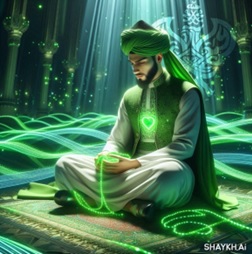 That, that is completely the opposite of faith and a spiritual path. It’s not about what I wanted. I should have put that at the door that, ‘I’m taking this path to submit my will. I don’t not…I know nothing, ya Rabbi. I know nothing of what I want and what I need and what’s good for me. Only You know. Whatever I used and thought was of no value. I put it at Your threshold, ya Rab, and I’m entering into Your kingdom asking that whatever Your Will is for me, guide me and let me to taslim and submit.’ That becomes the understanding. Only a humble person can think like that. Only a humble person can enact and implement that.
That to say that, ‘My will doesn’t count and that to submit myself into the oceans of submission and taslim.’ Taslima which is a beauty only opens by taslim, by submission. So, the beatific character is when the servant has sabr and taslim and submits. Allah (AJ) promised you something heavenly. Allah (AJ) will give it to you, but not in your time, in Allah’s (AJ). That’s our whole lives. Shaykhs have seen things that would be coming to them and twenty years later, it may come and the whole time, they thought it’s coming tomorrow.
Nabi Musa (as) Faithfully Performed Da’wah for 40 Years Against the Wishes of His People
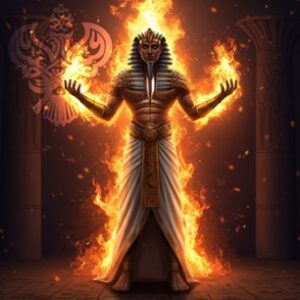 When Allah (AJ) promised Sayyidina Musa (as) that, ‘Go and take this kingdom from Fir’aun (Pharoah). Take authority. Take my people out of Egypt.’ He went. Fir’aun gave it to him and he went back to Allah (AJ) say, ‘What happened? I thought that I was going to get my people out and I would deal with Fir’aun.’ Allah (AJ) kept telling Sayyidina Musa (as), ‘InshaAllah, tomorrow.’ That ‘InshaAllah, tomorrow’ became forty years of da’wah (religious propagation) against Fir’aun. Every time he would talk to Fir’aun, Fir’aun would become angry and torture his people.
We described many times – his people begged him, ‘Don’t talk to Fir’aun anymore. So, every time you talk to Fir’aun, he kills us all and tortures and puts difficulty upon us. Stop talking to him.’ For forty years, Sayyidina Musa (as) dealt with Fir’aun until Allah (AJ) gave a permission that, ‘Now take My people out of there to the Promised Land.’ So, sabr (patience) of Allah (AJ) and patience in Allah’s (AJ) way is a beatific character.
Millions Gather at Karbala Each Year to Commemorate ‘Ashura
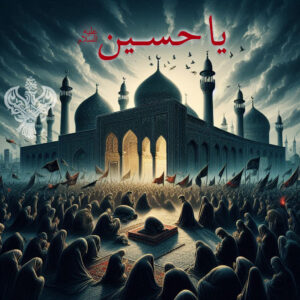 Imam al-Hussain (as) is representing for us that to have patience, have good character. Whatever our fate is in life, we have to face it. You can’t avoid yourself from what you think is going to be a difficulty. If you think that, that’s what Allah (AJ) wants. Then having patience and facing whatever Allah (AJ) wants for us then, alhamdulillah. That good character of sabr (patience) brings the beatific reality of Nabi Mustafa ﷺ. It means the beatific lights of Prophet ﷺ begin to dress the character, bless the character.
Imam al-Hussain (as) comes and reminds us: look that sacrifice how horrific, how difficult, how immensely difficult that was, but what type of beatific light and reality was that? That until today and until the Day of Judgment, humans on Earth will remember that sacrifice, will understand and commemorate that sacrifice to the Day of Judgment. Until today, they say 7 to 14 million people occupy the field of Karbala on ‘Ashura and Arba’een, the 40th day of the events of ‘Ashura. So, it means 14 million people, larger than Hajj (pilgrimage), gather on Arba’een to commemorate the sacrifice of a servant of Allah (AJ), a grandson of Sayyidina Muhammad ﷺ.
Imam Hussain (as) Left the Greatest Legacy on Earth
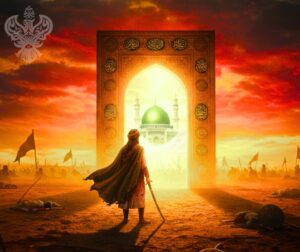 That’s the greatest khutbah (sermon). That’s the greatest gift. That’s the greatest reality. That’s the greatest futuhaat (openings of the heart) and book and knowledge. Everybody leaves so many books, so many knowledges, so many realities, but Imam al-Hussain (as) leaves the actual physical example. That, ‘I did, with my life, everything my beloved grandfather taught. I sacrificed myself for his nation. I sacrificed myself for sabr (patience) of Allah’s (AJ). If Allah (AJ) has written for me, I am accepting it and fulfilling the command of Allah (AJ).’
As a result, he left the greatest legacy on Earth, the most immense legacy on Earth. That 14 million people every year commemorating and hundreds of millions of people commemorating around the world and understanding that sacrifice. We pray that Allah (AJ) dress us from the immensity of its lights, immensity of its blessings. From whatever we can do of bringing water, making a well, bringing food, giving food out around the world in India, in Kenya, in Kashmir, in Pakistan, Vancouver, Los Angeles – wherever that we can do, may Allah (AJ) accept that and dress us from their light, dress us from their blessings. Take shares in the barakah (blessings) and the benefit and the immensity of what Allah (AJ) is dressing Imam al-Hussain (as) wa Shuhada e Karbala (as) (martyrs of Karbala) and all that they achieved.
The Greatest Ones to Love are Those With the Best Actions in Allah’s (AJ) Way
 That we to be raised under their shade of intercession of Imam al-Hussain (as) on the day of Yawmul Mahshar and the Day of Judgment and that every day of our life to be under his holy nazar (gaze) and his blessings, his prayers. That he watch over our souls, our family and our children. That we come through the door of love and that Prophet’s ﷺ promise is that, ‘You’ll be with whom you love.’
عَنْ أَنَسٍ رَضِيَ اللَّهُ عَنْهُ: … فَقَالَ (رَسُولُ اللهِ ﷺ): ” أَنْتَ مَعَ مَنْ أَحْبَبْتَ.” ]اَلْمَصْدَرْ: مُسْلِمْ:. ٧٥٢٠ ]
‘An Anasin (ra): … Faqala (Rasulullahi) ﷺ: “Anta ma’a man ahbabta.”
Narrated Anas ibn Malik (ra) that …the Messenger of Allah (pbuh) said: “You will be with whom you love.” [Source: Muslim 7520]
The greatest, the greatest of those to love are the ones whom had the greatest ‘amal (action) and ajer and reward in Allah’s (AJ) way. That inshaAllah, Allah (AJ) keep us to always love those whom Allah (AJ) loves and whom showed their love with their self, with their actions, and with their deeds. By keeping the love and the company of those loved ones, Allah (AJ) dress us and bless us and keep our soul always to be in their presence, inshaAllah.
Subhana rabbika rabbal ‘izzati ‘amma yasifoon, wa salaamun ‘alal mursaleen, walhamdulillahi rabbil ‘aalameen. Bi hurmati Muhammad al-Mustafa ﷺ wa bi siri Surat al-Fatiha.
Special thanks to our transcribers for their help with transcribing this suhbah.
Original Date of Suhbah: August 6, 2022
Related Articles:
- Tragedy of Karbala and Intercession of Prophet Muhammad ﷺ for the Ummah
- Imam Hussain (as) Sought Divine Justice in Karbala
- Traversing Ashura Through the Six Prophets
- Realities of ‘Ashura and the 6 Prophets – Secrets for the Soul
- Each Prophet (as) Dresses Us With Lights of Ashura
Please Donate and support us to spread these heavenly knowledges by clicking the heart button below.

Copyright © 2025 Naqshbandi Islamic Center of Vancouver, All Rights Reserved.