









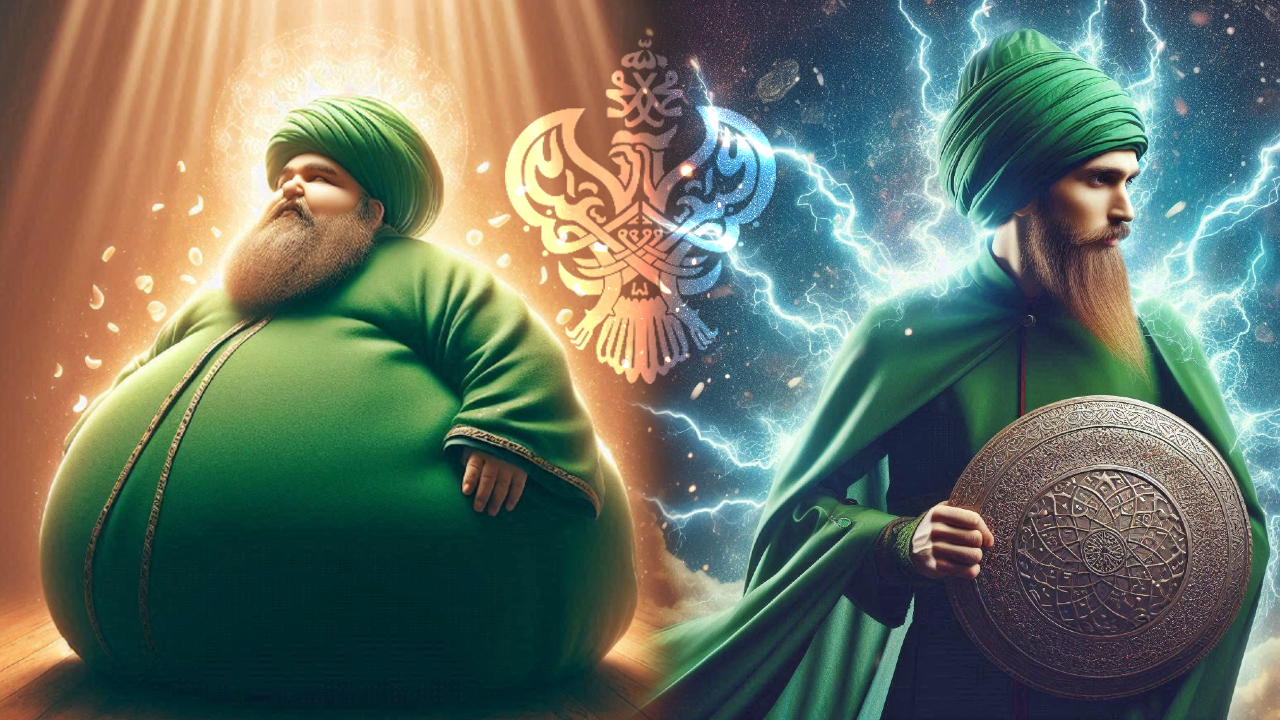
Significance of the State of Being OFF & How Does It Impact A Person’s Physical Mass? Q&A
From the Realities of Mawlana (Q) as taught by Shaykh Nurjan Mirahmadi.
أَعُوذُ بِاللَّهِ مِنَ الشَّيطَانِ الرَّجِيمِ
بِسْمِ اللهِ الرَّحْمَنِ الرَّحِيمْ
A’uzu Billahi Minash Shaitanir Rajeem
Bismillahir Rahmanir Raheem
I seek refuge in Allah from the accursed Satan
In the Name of Allah, the Most Compassionate, the Most Merciful
Alhamdulillahi Rabbil ‘aalameen, was salaatu was salaamu ‘alaa Ashrafil Mursaleen, Sayyidina wa Mawlana Muhammadul Mustafa ﷺ. Madad ya Sayyidi ya Rasulul Kareem, Ya Habibul ‘Azeem, unzur halana wa ishfa’lana, ‘abidona bi madadikum wa nazarekum.
Atiullah wa atiur Rasul wa Ulil amre minkum. Always a reminder for myself, ana abdukal ‘ajeez, wa dayeef, wa miskin, wa zhalim, wa jahl, and but for the grace of Allah (AJ) that we’re still in existence.
أَطِيعُوا اللَّهَ وَأَطِيعُوا الرَّسُولَ وَأُولِي الْأَمْرِ مِنكُم… ﴿٥٩﴾ …
4:59 – “…Atiullaha wa atiur Rasula wa Ulil amre minkum…” (Surat an-Nisa)
“…Obey Allah, obey the Messenger, and those in authority among you…” (The Women, 4:59)
Question 1: If the atom is the entire universe, how are there atoms inside of the universe?
 Shaykh Nurjan Mirahmadi: If the atom is the entire universe, how are there atoms inside the universe?
 The universe is as one atom, as one atom and within the atom contains many different realities. So we don’t understand the atom yet. So it’s as or the similarity of an atom, ‘Adam’ and we have ‘Adam’ and ‘Ahdam’ ‘Ahdam.’ So it has to do with the reality of the nuqt (dot), so that everything exists within that nuqt. As soon as you expand the nuqt, all creation is within that because there’s humans in there, there’s every type of creation and all of those creations have atoms. When you reduce all of those, it’s but one dot. So alhamdulillah, not something you can put your mind onto. You have to approach through your heart, inshaAllah.
Question 2: Can you please tell us more about the mass, as mass is a dense form of energy? Can you please enlighten our hearts on it?
Shaykh Nurjan Mirahmadi: The mass is the part of the formula that we’re trying to get rid of. So if we study a star formation and you go to nurmuhammad.com and type in ‘What is a star.’
 That in the stages of this development, some people may actually build their mass because as energy has been loaded upon the person, their mass will equal and keep them to be balanced so their physical mass actually will increase to compensate for the amount of energy that’s being put upon them. Later when necessary, Allah (AJ) will reduce their mass. As they lose their mass, what happens to the equation? It is that the energy increases. The great state of energy is death. Why? Because the mass is completely lost. So the relationship of mass and energy then have a direct correlation.
 In the beginning stages, if they’re loading with lots of ‘amal – lots of actions, lots of zikr (Divine remembrance), lots of energy, the mass of the individual actually may increase just to keep them at an even keel. When Allah (AJ) wants them to begin to use the energy, the physical mass can be reduced. The more and more they reach into these energy states then they learn to lose the mass in which Allah (AJ) granting then the mawt qablil mawt (death of desires before physical death) in which the state of death is that their mass is far less than the amount of energy that they’re building. As a result of that excess energy and the loss of mass then their equation basically is energy. That the two lights that Allah (AJ) opened for them is bringing the ‘E’ and the equation of energy so that they can be beneficial for humanity.
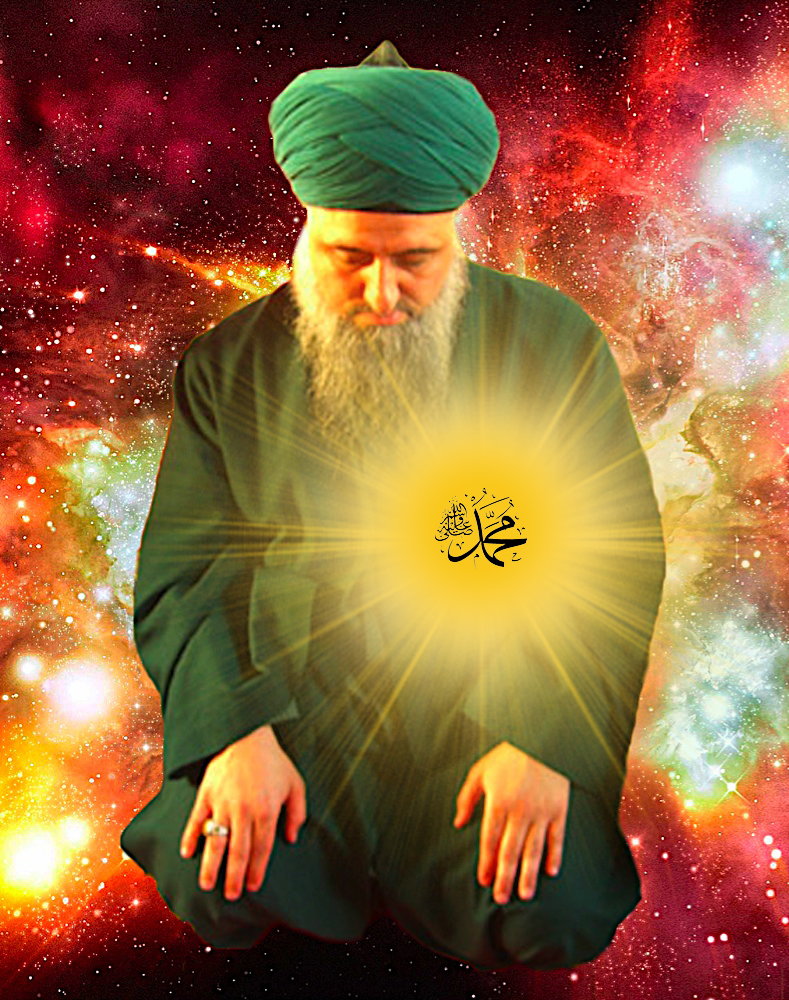 The two lights that they open is then in the nur (light) and the naar (fire) and that goes back to the reality of the articles on ‘insan (human being).’ That everyone has been given two noons – Zun-noon (Owner of the two noons) and their responsibility to build the internal sun and not only the reflection. Most people focus only on the reflective light in which they reflect these realities. But the Muhammadan perfection is the opening of the internal power, the internal sun within their hearts, is that open the sun within your heart. That’s with the practices and the energy and the love of Sayyidina Muhammad ﷺ that they don’t only reflect lights but their hearts are luminous like the sun. Then many different realities of the sun that we have. All of these are on Muhammadan way, these are in the Lataif (subtle energy points) of the qalb (heart) [Book: .] For people should study those books, if they have these types of interests, inshaAllah.
Question 3: When I’m contemplating about being off, I have an image of a device that you have to turn off to charge. Is this correct?
Shaykh Nurjan Mirahmadi: Sure. If that’s your understanding then that’s your understanding. But you have to unplug.
 You have to learn to shut the energy down, you have to know that when your ego is trying to go and turn itself ‘on’ to be recognized, to reply to people, to be angered by people – all of the characteristics that ‘on’ represents and we have that in previous talks. So when the fir’aunic understanding is, look the people of dunya (material world), they interview them, they are the representatives of Fir’aun (pharaoh), ‘Oh you know what I did? I did like that, I did like that, I like this, I like that,’ and then how much they’re into vanity and themselves. Everything about what’s happening in dunya it shows us, so you don’t have to really guess. Just look at them and say, ‘I shouldn’t be like that.’ In which they want to continuously post on things that they don’t have and looks that they don’t have, everything is modified and fake and everything is just about pumping their ego and their characteristics and that’s just from images.
 Then when you talk to these types of people you can imagine then how much they’re into themselves and all their accomplishments and how great they are and all the ‘I, I, I, I did that, I did this, I did that,’ and these are the characteristics Allah (AJ) wants us to stay away from in which ‘I’ doesn’t exist in the vocabulary, inshaAllah become ‘we.’ That ‘we’ from heavenly kingdom are doing. Not, ‘I.’ ‘I’m doing nothing.’ So everybody has an understanding of it in their mind. They either think they’re a light switch and they’re going to shut off or they’re a remote control and somebody powered them down and whatever it is, doesn’t matter. Whatever works for you, just learn to shut off, inshaAllah.
Question 4: So what does it mean to be off but not completely off?
Shaykh Nurjan Mirahmadi: I don’t know what that means. ‘Off but not completely off’ what does that mean?
 If you think you’re going to die when you’re meditating, don’t worry, it’s okay, die. But don’t be scared of that. You’re not going to die. So I know people that when they want to meditate they say, ‘Oh I thought I was going to die, I was going to die,’ and what’s wrong with that? You’re not going to die, so you have to overcome that fear. So there’s no way to be completely off. The question doesn’t… you know, it’s not that simple thinking you can turn yourself off. Just as soon as you acknowledge that this is what you want to do in life to learn how to be off then that becomes a great struggle.
 Don’t let yourself be identified, don’t talk back, don’t have anger, you know just stay quiet that Allah (AJ) is going to humble you now that you want to take the path of nothingness and you become like the dog of Ashab ul Kahf (Companions of the Cave) in which everyone wants to throw rocks at you and you’re good with that. That people will say, ‘Oh why are they throwing rocks at you?’ Say, ‘Why not?’ This is what they do to the dog of Ashab ul Kahf, they throw rocks at it because Allah (AJ) wants to give a reward to the dog. So in our lives then be like the dog of Ashab ul Kahf that take the rocks and difficulties of people and the bad character of people and be humble.
 Don’t judge for you shall be judged. Many people judge other people, ‘Oh I don’t like him, he’s like this, he’s like that, he’s like that.’ Well what do you know about somebody when you yourself are not good or not pure? So the path was based on – don’t judge. Judge not for you shall be judged. The way in which you judge people, Allah (AJ) will judge you. So we took a life in which you say, ‘We don’t know what people are doing. They do whatever they want to do but me myself I’m nothing, I’m nothing and I have to achieve this light and this power, this nearness to Sayyidina Muhammad ﷺ,’ and that becomes the only importance. Look at the YouTubes, all the Hipster imams (religious leaders) and everybody got like gold chains and long hair and they look like it’s a rock concert – that’s not being off, that’s not the system.
 If you look at the awliya (saints) of the Sham al Sharif (Damascus) all, all shaved heads. Why? Because the animal kingdom has long hair, the animal kingdom make themselves to be beautiful to attract people. So if you want to tame yourself then take more towards the Heavenly Kingdom. So they grow their beards, they shorten their hair, they discipline into what they’re wearing of their sunnah (traditions of Prophet Muhammad ﷺ) attire so everything that the tariqah (spiritual path) comes and everyone has a different time. So some people may keep their hair long, no problem but some people may not have a very long beard but this is all about the system of being ‘on’ and ‘off.’ It’s not easy to walk through this dunya with a heavenly identity, that’s the training of being ‘off.’ But they want to be ‘on,’ they want to be hip with people, they want to be into everything and that’s very much ‘on’ and that type of character then is going to be in difficulty reaching to the Divinely Presence.
 So they described it before and without all of this social media if you came to the tariqah, Mawlana Shaykh (Q) described going to see Shaykh Daghestani (Q) and they came from very wealthy backgrounds and say, ‘Oh we want to follow tariqah.’ Says, ‘You can’t follow tariqah’. Say, ‘No, we’re coming to follow tariqah.’ Say, ‘You can’t follow tariqah.’ Said, ‘No, we want to follow tariqah.’ He said, ‘Okay! Hussain, go see Hussain.’ Hussain took them and there was, it looked like potato sack, very, very tough fabric like firm wool, traditional Sufi outfit was wool, it hurts your skin. He said it was in a box filled with fleas and they’re supposed to take off their fancy clothes and put this sack with fleas and come back. Says him and his brother, they took off their fancy clothes and put these clothes with the fleas, said they had been eaten all over their body by the fleas on their body. They came back to the presence of the Shaykh and said, ‘Okay now, now I’ll accept you. So that you sort of don’t come with your identity to me, be nothing,’ and alhamdulillah shaved heads and a sack of wool filled with fleas. But that’s no longer capable of that but that’s how these awliya entered to tariqahs in which the Shaykh’s duty was to efface them and bring everything down so that at least they stood a chance to try to accomplish the realities.
 But now we’re dealing with social media and people from all over the world with their identities and you know five minutes of watching your video and 500 minutes of watching every other nasty thing. So it’s difficult but this is how they were trained in which to completely efface and go through hardship and difficulty. Said – just sitting in the Shaykh’s presence while these things are eating his body and itching like crazy and this was a continuous form of testing for them. So alhamdulillah, this is again in Tazkiratul Awliya – in the lives of awliyaullah (saints) many, many stories like that. Now it’s not capable anymore but at least it gave us the direction. So you say, ‘Oh the shaykh is just making things up’. No, he’s not making. Look, read their stories, read how difficult it was and say, ‘If I can do at least one tenth of that and struggle in that way, alhamdulillah I should be successful.’
Question 5: Can testing become severe for students of the path in the month of Dhul Qa’dah or will it help in understanding all the badness that the students have within?
Shaykh Nurjan Mirahmadi: Allah (AJ) only increases the speed. So whom Allah (AJ) wants to increase the testing and increase the speed then He doesn’t test anyone beyond their ability, so everyone has a different ability.
(٢٨٦) …لَا يُكَلِّفُ اللَّـهُ نَفْسًا إِلَّا وُسْعَهَا
2:286 – “La yukallifullahu nafsan illa wus’aha…” (Surat Al-Baqarah)
“Allah does not place a burden on a soul, more than it can bear/beyond its capacity…” (The Cow, 2:286)
 What you may think is difficult maybe a breeze for somebody else, because their life faced no difficulty. What they’ve been through is probably somebody else’s worst nightmare if that was to happen to them. So again, everyone’s life is uniquely theirs and Allah (AJ) knows what He wants to test His servant with and how He wants to test His servant and it’s a very unique path, an individual path. So everyone will be tested individually based on their own circumstances. We are to teach and give you the tools, so that you meditate, contemplate, make your connection. Shaykh doesn’t make choices for you, doesn’t take the path for you. Don’t send him like, ‘Oh should I buy this or should I get that, should I get that, should I do this.’ The shaykh is not here to take your test for you. He’s here to teach you, ‘Okay, did you meditate? Why are you asking me this question if you don’t meditate? Why would I tell you which place to get or not to get? Why don’t you make the wrong choice, fail at it and then realize you didn’t meditate?’ Right?
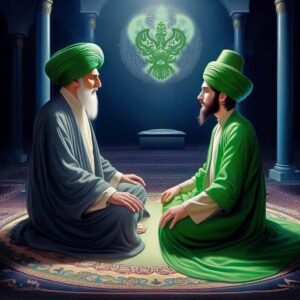 The shaykh doesn’t take the test for you. He’s otherwise, that’s… he’s not a gypsy where you ask him something and he gives you answers. It’s not a gypsy class, it’s the way of tafakkur (contemplation) in which you’re supposed to making your connection, make your connection, make your connection. Then ask him about heavenly realities not dunya, inshaAllah. Then when you made your connection inshaAllah, ‘I’m about to do this, pray for me,’ inshaAllah then they pray for you. But these things have to be based on practices, otherwise the shaykh then is handicapping people by giving answers to them. Then outside people say, ‘Oh look, look this is like a spooky place. He gives answers for everybody, he like takes their path and their life for them.’ Say, ‘No, we don’t take anybody’s path,’ and we have not and nobody can ever say that. That, ‘Oh no, he gave us answers for everything.’ No!
 Go and make a choice and if it’s right, alhamdulillah, if it was wrong then alhamdulillah because you’re going to learn something from it. Whatever choice you make, we pray that Allah (AJ) to save you and to protect you, inshaAllah. So then they make a choice and they realize, ‘Shaykh, right at the last minute oh I realized that was really bad, that was going to go turn out wrong,’ so alhamdulillah that’s the barakah (blessing) of the du’a (supplication). That Allah (AJ) show you what’s good and what’s bad for you but not that the shaykh took the test for the person – that would be cheating and Allah (AJ) wouldn’t be pleased with that, inshaAllah.
Question 6: Is feeling inferior, having low self-esteem or feeling you aren’t good enough the same as being a nuqt and being nothing?
Shaykh Nurjan Mirahmadi: I think we’ve had these questions. These are coming from subcontinent where everybody like is abused and thinking that being abused is the same as talking about humility. No, this is not at all the two related.
 Humility and oppression are different. Anybody whom is oppressed by being beaten, ridiculed and you know very bad oppression upon people, their relief Allah (AJ) gives the oppressed their du’a; their du’as are accepted. The du’a of the oppressed person is accepted – that’s Allah’s (AJ) relief for them.
عَنِ ابْنِ عَبَّاسٍ ـ رَضِيَ اللَّهُ عَنّهُ ـ أَنَّ النَّبِيَّ ﷺ بَعَثَ مُعَاذَ بْنَ جَبَلٍ إِلَى الْيَمَنِ، فَقَالَ ﷺ ”اتَّقِ دَعْوَةَ الْمَظْلُومِ، فَإِنَّهَا لَيْسَ بَيْنَهَا وَبَيْنَ اللَّهِ (عَزَّ وَجَلَّ) حِجَابٌ ”.
[صَحِيحُ الْبُخَارِي ٢٤٤٨، كِتَابٌ ٤٦، حَدِيثٌ ٩]
‘An ibni ‘Abbasin (ra) anan Nabiya ﷺ ba’asa Mu’azab na Jabalin ilal Yamani, faqala ﷺ: “Ittaqi da’watal mazhlumi, fa’innaha laysa baynaha wa baynal Allahi (AJ) ḥijabon.” [Sahih Al Bukhari 2448, Kitab 46, Hadith 9]
Ibn Abbas (ra) narrated the Messenger of Allah (pbuh) sent Mu’adh bin Jabal to Yemen, and said (pbuh): “Beware of the supplication of the oppressed, for there is no veil between it and Allah (AJ).” [Authentic according to Bukhari 2448, Book 46, Hadith 9]
So the other and the most understanding is you’re well to do, you are strong, you have everything and somebody comes into your face and starts saying something and you lower your head and remain quiet, remain silent. It means you have the means and the ability to react but you choose for Allah’s (AJ) sake not to react so that’s where it becomes difficult. Not the person who he has no ability to do anything and he’s going to now be whipped by the police, this is not being humble, that’s oppressed. Because if you even raise your hand they’re going to shoot you. That’s not being humble, so no, that’s oppression.
 Humble is if you have the means to do something serious back but you choose not to for the sake of Allah (AJ). You’re at work you know you’re with co-employees and you can say something and really demean somebody and insult them and probably get away with it but you choose to be humble and resolve it in a peaceful manner. Those characteristics in which would be pleasing to Allah (AJ) should be obvious. That you know humbleness and oppression are completely two different realities, inshaAllah.
Question 7: Can the nafs (ego) force one to do more voluntary prayers to a level that they will not want to pray the next day because of the inner force?
Shaykh Nurjan Mirahmadi: I don’t know if it’s the nafs doing that or whatever reason. You pray one day a lot and then next day the nafs doesn’t want to pray – that becomes the struggle and that’s a part of the…
 If you think your nafs is like a horse or like a donkey that one day it seems to take you where you want to go, the next day your donkey is very stubborn. All it makes is noise and Allah (AJ) describes the noise of the donkeys the worst of sounds and the nafs is like that, like a donkey. ‘Hee-haw, hee-haw’ [donkey braying]. He’s just making ridiculous complaints, ridiculous noises, ridiculous excuses and one day it takes you where you want to go and most of the other days is like it’s not going to move, it doesn’t want to do anything and that’s when it becomes the one whom can struggle against themselves. ‘Okay you’re not going to do that, I’m not going to feed you today and I’m not going to give you water today and I’m not going to do this today,’ and they know how to begin to manipulate the horse or the donkey to begin to do what’s necessary. That became a part of their struggles in life. Until Allah (AJ) gave them a strength in which to ride their donkey. But at times again at any moment the donkey can become strong and you know put difficulty upon the rider; it’s never something accomplished. That’s why Prophet ﷺ described, ‘Don’t leave me for blink of an eye to my donkey, to my nafs.’
اللَّهُمَّ لَا تَكِلْنِي إِلَى نَفْسِي طَرْفَةَ عَيْنٍ وَلَا أَقَلَّ مِنْ ذَلِكَ
“Allahumma laa takilnee ila nafsee tarfat `aynin wa laa aqala min dhalika.”
“O Allah! Don’t leave me to my ego for the blink of an eye or less.” Prophet Muhammad (pbuh)
 Because in a blink, all of a sudden he threw you off and you’re in trouble now. So Prophet’s ﷺ warning for us is be vigilant on riding. If you give too much rope, he’s going to go wild and then you cannot slow it down, you cannot control it. If you give it too much, it becomes tired. You give it too little, it’s going to die. So it’s balance in life on how to balance yourself through everything, inshaAllah. By following what Prophet ﷺ brought for us, following the examples of mashayikh (spiritual guides) and their way of living then we try our best to accomplish what Allah (AJ) wants us to accomplish, inshaAllah.
Question 8: Sayyidi every day I get messages from many people who are asking for money. They all have the same starting message so now I start to reply asking them if they would like to donate to Fatima Zahra Helping Hand.
Shaykh Nurjan Mirahmadi: Yeah, most of those are from Uganda and Nigeria. Yeah, just be careful, be careful of that type of activity. But alhamdulillah Allah (AJ) gave to us our own means, our own charities, our own projects and we keep busy with ourselves and our community. So these other organizations who they give to, why they give to and what they’re trying to accomplish not known to us.
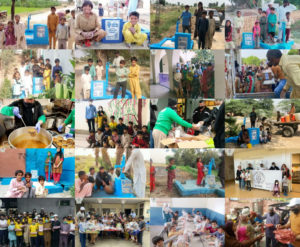 But alhamdulillah all our projects are our people. So in Kenya, it’s Taufeeq’s face out there. In India is Nasyer so we know these people. In Pakistan it’s Mahdi and his family and all the other crew out there. So we know these people and that’s the only reason we’re doing it. If we didn’t know them, we’re not interested in sending money abroad to anyone. It’s because that money goes to their hands and they put their faith in action and as a result, people are sort of blossoming and benefiting. So alhamdulillah it’s a great opportunity for those whom support and for the people whom are actually doing the projects. Misbah in Chicago, Asim in LA, our crew in Vancouver, all of them trying their best and all the other individual pockets now that people went and got milk and bread and gave it out to the streets, people in Australia, people in Singapore, people in Florida. I don’t think it’s anywhere that they’re not trying to do that. We have now I think one student coming out of Nigeria that he’s buying his own things and giving it out.
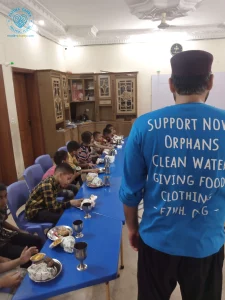 Don’t, don’t send you know ‘Do like this, do like that.’ Uganda emails are like, ‘Send us a bulk of money so that we can put your picture on an image that probably already 10 people put their pictures.’ These are the students actually doing the projects and that’s the only interest we have is that when the students are doing it and that their faith is blossoming and as a result other people are benefiting from that reality, inshaAllah. We had some in UK but they kind of withered out. I don’t know if UK doesn’t have poverty maybe. No hungry people in the UK [Shaykh smiles].
Question 9: After reflection on energy, is doing good same as doing bad but just in the opposite direction meaning a big sinner can be turned into a great pious person in a second?
Shaykh Nurjan Mirahmadi: I don’t know what that means but anybody can be turned to anything.
 So in the last days that the person wakes up a believer and all their life they were doing bad. That a different person can go to sleep a believer and wake up with no belief because of the extent of horrific testing and the proximity of dajjal (man of deceit) and the influence that dajjal has upon people’s minds and confusing them in every aspect.
عَنْ أَبِي مُوسَى الأَشْعَرِيِّ رَضِيَ اللهُ عَنْهُ، قَالَ, قَالَ رَسُولُ اللَّهِ ﷺـ: “ إِنَّ بَيْنَ يَدَىِ السَّاعَةِ فِتَنًا كَقِطَعِ اللَّيْلِ الْمُظْلِمِ. يُصْبِحُ الرَّجُلُ فِيهَا مُؤْمِنًا وَيُمْسِي كَافِرًا،۔۔۔
[سُنَنُ إِبْنِ مَاجَهْ ٣٩٦١، كِتَابْ ٣٦، حَدِيِثْ ٣٦]
‘An Abi Musa al Ash‘ari, qala, qala Rasulallahi ﷺ: “Inna bayna yadays saa‘ati fitanan kaqeta’il laylil muzlimi. Yusbehur rajulu muyminan wa yumsi kaafiran….” [Sunan Ibn Majah 3961, Kitab 36, Hadith 36]
It was narrated from Abu Musa Al-Ash’ari (ra) that the Messenger of Allah (pbuh) said: “Before the Hour comes, there will be tribulation like pieces of black night, when a man will wake up as a believer but be a disbeliever by evening, and he will be a believer in the evening but will be a disbeliever by morning…”
[Sunan Ibn Majah 3961, Book 36, Hadith 36]
 That’s why the majority of people when you talk to them they say, ‘Oh I thought this was good, I thought that was good, I thought that was good.’ I was like, ‘You seem to take the world through your physical eyes. Do you do any contemplating?’ Because it doesn’t seem like you’re correct in your understanding of anything and most likely they’re, ‘No, no I don’t do any contemplating, I just when I look at something it looks like that should be correct.’ I said, ‘But that’s you know the system of dajjal, is that he’s a deception.’ We don’t have Antichrist because this is not about Christ for us we already have Sayyidina Isa (as). So what Prophet ﷺ brought for us was a ‘Man of Deception.’ So there’s a great deceit happening.
 So in everything in our life we have to look for deception where somebody says it’s one thing but it’s really not and that’s the thing. So everyone now is, ‘Oh this is going to bring you paradise.’ You say, ‘No, that look like it’s going to bring hell.’ Then they say, ‘Well don’t do these things, this is like going to bring you hell.’ Say, ‘No, what are you talking about? Well how could the Mawlid (celebration of the birthday of Prophet ﷺ) bring me hell? How could zikr bring me hell? How could going to zikr bring me hell? How could a tasbih (prayer beads) bring me hell?’ No! So means that’s paradise and that’s the system.
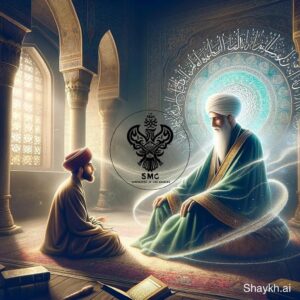 So they have to have a tafakkur, they have to have a relationship with the shaykh so that they can ask and say, ‘That this imam or this video just said this.’ I said, ‘Well you shouldn’t be watching that video.’ It is one imam giving fatwa (Islamic ruling) on everything and then he says he likes to drink beer. Why are they watching that man? Clearly he’s not tariqah, clearly he’s not even from this path and this understanding. But if you start taking your religion just from any source on YouTube from anything that you’re hearing, you can imagine amount of confusion that people will have.
 So we said that the blessings from Allah (AJ) is that when you have a shaykh and you stand firm to the shaykh, follow his guidance, follow the love for Sayyidina Muhammad ﷺ and the teachings that have to do with the love for Sayyidina Muhammad ﷺ. That should save us. You don’t have to go left and you don’t have to go right. But know that you’re going to be tested in your loyalty because that path doesn’t come easy and that ticket is not something cheap. So we’re going to be tested all our lives, tested in loyalty, in loyalty, in loyalty; steadfast. It is said before it’s not something popular. You believe in it and everybody would come against you and say, ‘Why are you believing in that? Why are you following? No, no you should follow this, you should do this.’ We said, ‘No, no! We made for ourself a door and that was a door for paradise and we enter through it.’ So that’s faith and you know, your faith is in action.
Subhana rabbika rabbal ‘izzati ‘amma yasifoon, wa salaamun ‘alal mursaleen, walhamdulillahi rabbil ‘aalameen. Bi hurmati Muhammad al-Mustafa ﷺ wa bi siri Surat al-Fatiha.
Special thanks to our transcribers for their help with transcribing this suhbah.
Original Date of Suhbah: May 20, 2023
Related Articles:
- Leave Your Realm That’s Controlled By Pharaonic Bloodlines & Enter Spiritual Promised Land (Malakut) Q&A
- Satanic Power is Pulling On People While the World is Collapsing
- Meditate Now For Connection – World is Changing Fast
- Humbleness Versus Oppression Q&A
- Who Will Be The Chosen Survivors of End Times? Q&A
- Fight Your Nafs (Ego) and Listen to Your Soul’s Inspirations Q&A
- Who Sits on Your Chair Determines Your Direction on the Spiritual Elevator
- The Month of Earthquakes and Shaking – 11th Lunar Month Dhul Qiʻdah
- Hold Firm to Your Tariqah – Holy Qur’an, 72:16-17
Please Donate and support us to spread these heavenly knowledges by clicking the heart button below.

Copyright © 2024 Naqshbandi Islamic Center of Vancouver, All Rights Reserved.